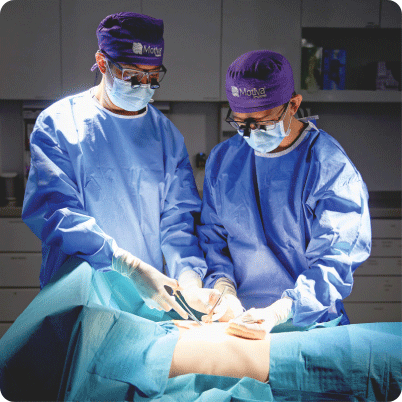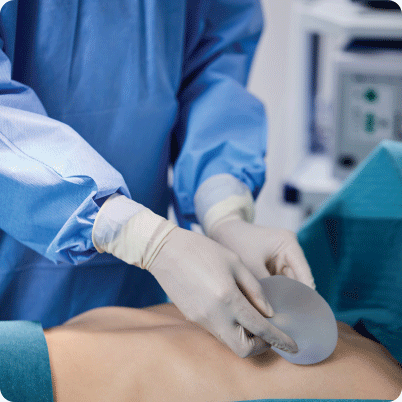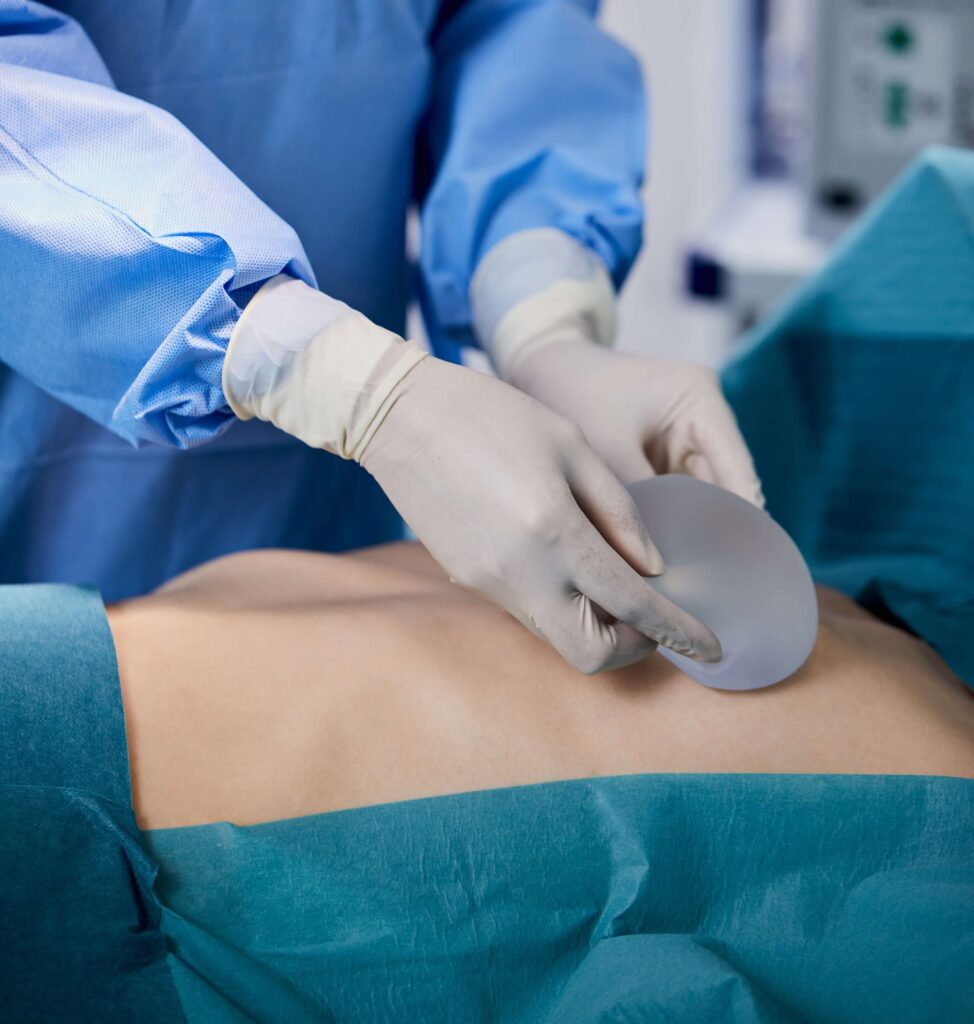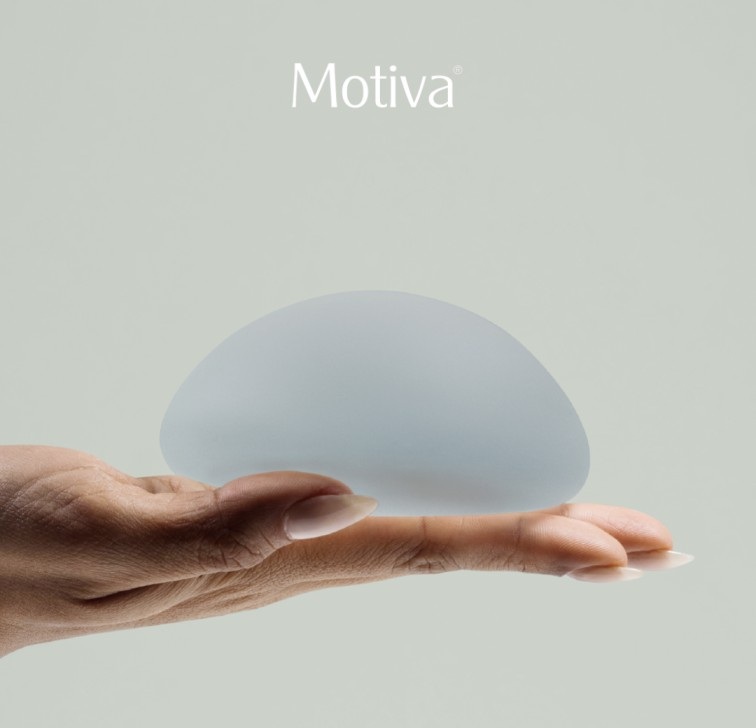
Motiva® implants are one of the options available for breast augmentation.
They are made from medical‑grade silicone gel and come in a range of shapes, sizes, and surface textures to accommodate
different anatomical profiles and surgical plans.
They are designed to closely mimic the natural look, feel, and movement of real breast tissue.

Multiple profiles and volumes to tailor to measurements.

Available in the Ergonomix® design.

Features the SmoothSilk® / SilkSurface® implant shell.

Decisions based on anatomy, goals, and medical history.

Motiva® Ergonomix™ is designed to move naturally with the body, offering a soft and balanced contour.
Motiva® JOY™ combines the Ergonomix² implant with updated gel technology for smoother movement and comfort.
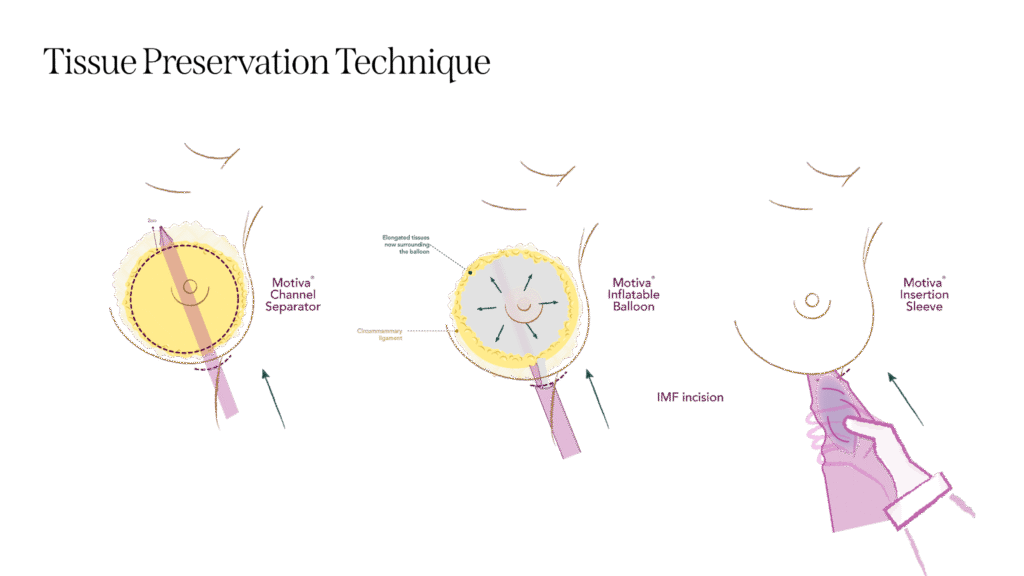
Motiva Preservé™ is a tissue-preserving surgical technique rather than an implant type.

Motiva® Ergonomix™ is designed to move naturally with the body, offering a soft and balanced contour.
• It features the SmoothSilk® / SilkSurface® shell with a BluSeal® layer that allows visual integrity checks.
• The cohesive silicone gel inside helps maintain shape while providing a soft, natural feel.
• It is commonly chosen for those who prefer a natural-looking enhancement that complements daily movement.

Motiva® JOY™ combines the Ergonomix² implant with updated gel technology for smoother movement and comfort.
• It includes a digital device identification feature that assists traceability and documentation.
• The implant is designed to adapt gently with body posture and is available through participating MOH-licensed clinics.
• This option may suit individuals seeking natural form with added safety and traceability features.

Motiva Preservé™ is a tissue-preserving surgical technique rather than an implant type.
• It focuses on carefully expanding natural tissue layers instead of cutting through muscle, to help maintain structural support.
• The method aims to reduce unnecessary tissue trauma and support stable implant positioning.
• Preservé™ is often used with Motiva Ergonomix™ or JOY™ implants, as determined by the surgeon’s assessment.

Motiva® Ergonomix™ is designed to move naturally with the body, offering a soft and balanced contour.
• It features the SmoothSilk® / SilkSurface® shell with a BluSeal® layer that allows visual integrity checks.
• The cohesive silicone gel inside helps maintain shape while providing a soft, natural feel.
• It is commonly chosen for those who prefer a natural-looking enhancement that complements daily movement.

Motiva® JOY™ combines the Ergonomix² implant with updated gel technology for smoother movement and comfort.
• It includes a digital device identification feature that assists traceability and documentation.
• The implant is designed to adapt gently with body posture and is available through participating MOH-licensed clinics.
• This option may suit individuals seeking natural form with added safety and traceability features.

Motiva Preservé™ is a tissue-preserving surgical technique rather than an implant type.
• It focuses on carefully expanding natural tissue layers instead of cutting through muscle, to help maintain structural support.
• The method aims to reduce unnecessary tissue trauma and support stable implant positioning.
• Preservé™ is often used with Motiva Ergonomix™ or JOY™ implants, as determined by the surgeon’s assessment.

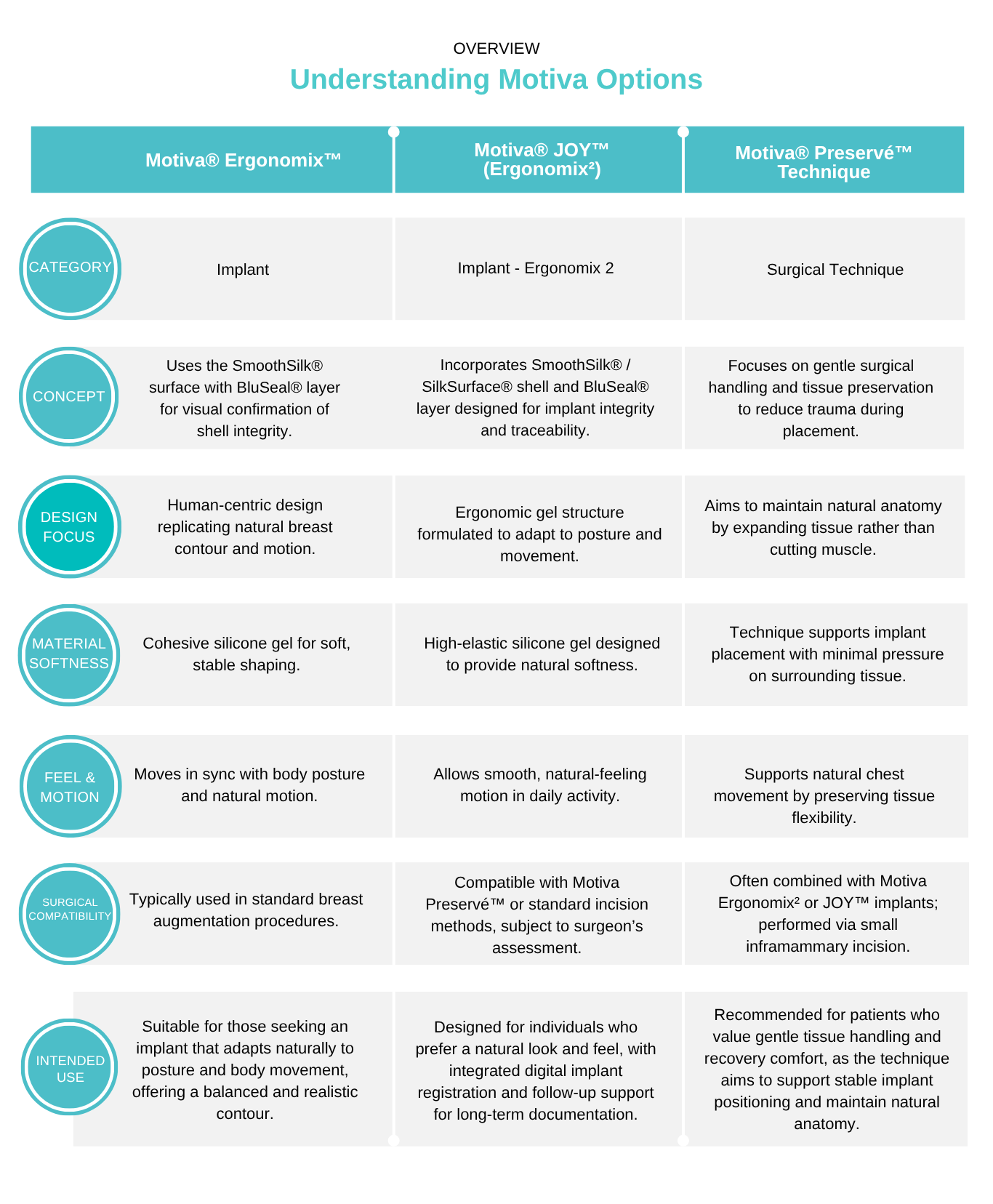
| Motiva® Ergonomix™ | Motiva® JOY™ (Ergonomix®) | Motiva® Preservé™ Technique | |
|---|---|---|---|
Category |
Implant | Program + Implant Package | Surgical Technique |
Concept |
Uses the SmoothSilk® surface with BluSeal® layer for visual confirmation of shell integrity. | Incorporates SmoothSilk® / SilkSurface® shell and BluSeal® layer designed for implant integrity and traceability. | Focuses on gentle surgical handling and tissue preservation to reduce trauma during placement. |
Design Focus |
Human-centric design replicating natural breast contour and motion. | Ergonomic gel structure formulated to adapt to posture and movement. | Aims to maintain natural anatomy by expanding tissue rather than cutting muscle. |
Material Softness |
Cohesive silicone gel for soft, stable shaping. | High-elastic silicone gel designed to provide natural softness. | Technique supports implant placement with minimal pressure on surrounding tissue. |
Feel & Motion |
Moves in sync with body posture and natural motion. | Allows smooth, natural-feeling motion in daily activity. | Supports natural chest movement by preserving tissue flexibility. |
Surgical Compatibility |
Typically used in standard breast augmentation procedures. | Compatible with Motiva Preservé™ or standard incision methods, subject to surgeon’s assessment. | Often combined with Motiva Ergonomix® or JOY™ implants; performed via small inframammary incision. |
Intended Use |
Suitable for those seeking an implant that adapts naturally to posture and body movement, offering a balanced and realistic contour. | Designed for individuals who prefer a natural look and feel, with integrated digital implant registration and follow-up support for long-term documentation. | Recommended for patients who value gentle tissue handling and recovery comfort, as the technique aims to support stable implant positioning and maintain natural anatomy. |
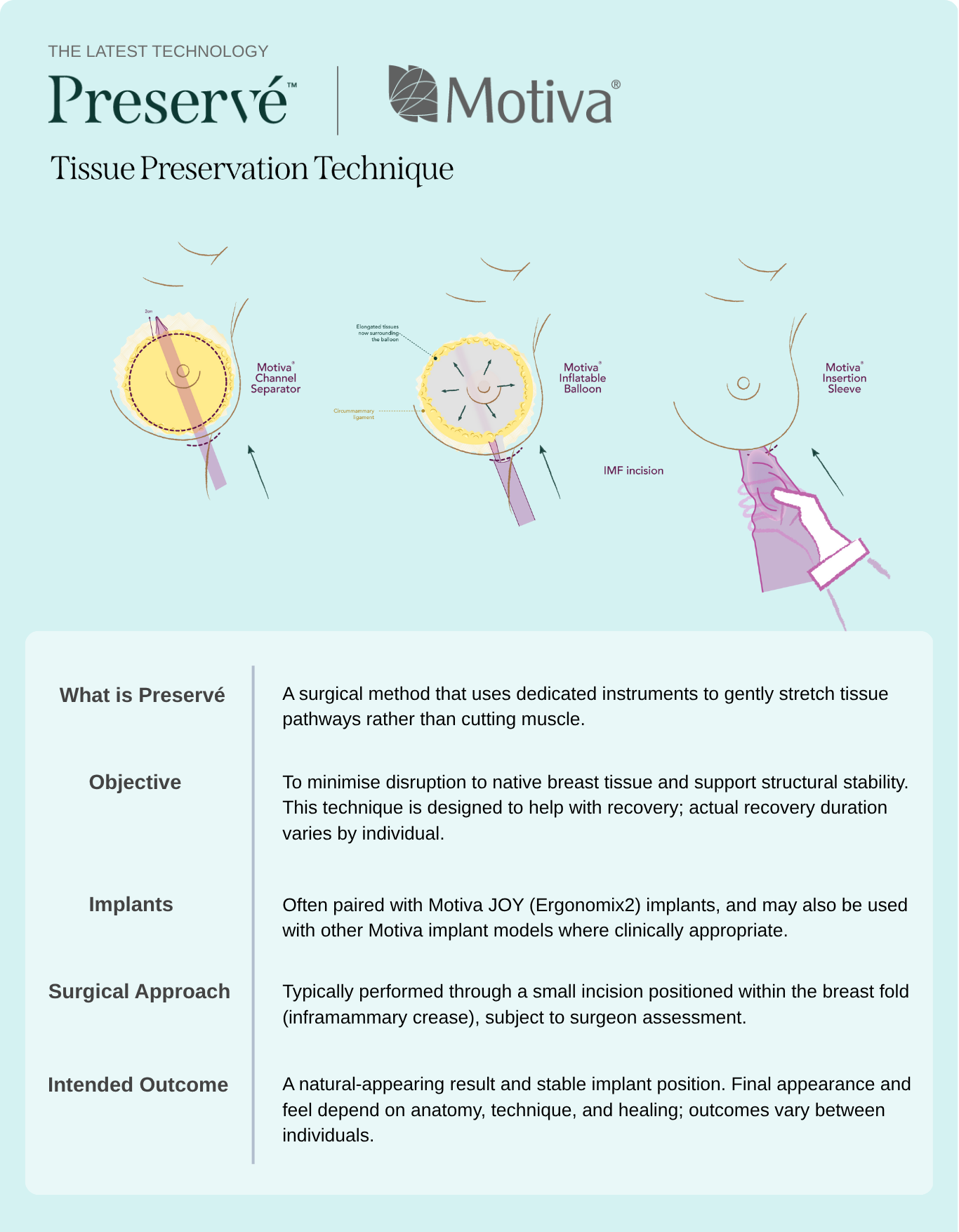
A surgical method that uses dedicated instruments to gently stretch tissue
pathways rather than cutting muscle.
To minimise disruption to native breast tissue and support structural stability.
This technique is designed to help with recovery; actual recovery duration
varies by individual.
Often paired with Motiva JOY (Ergonomix2) implants, and may also be used
with other Motiva implant models where clinically appropriate.
Typically performed through a small incision positioned within the breast fold
(inframammary crease), subject to surgeon assessment.
A natural‑appearing result and stable implant position. Final appearance and
feel depend on anatomy, technique, and healing; outcomes vary between
individuals.
A surgical method that uses dedicated instruments to gently stretch tissue
pathways rather than cutting muscle.
To minimise disruption to native breast tissue and support structural stability.
This technique is designed to help with recovery; actual recovery duration
varies by individual.
Often paired with Motiva JOY (Ergonomix2) implants, and may also be used
with other Motiva implant models where clinically appropriate.
Typically performed through a small incision positioned within the breast fold
(inframammary crease), subject to surgeon assessment.
A natural‑appearing result and stable implant position. Final appearance and
feel depend on anatomy, technique, and healing; outcomes vary between
individuals.

Round, Ergonomix®, Joy®, Preservé® and other implant types
Medical‑grade silicone gel with an outer shell designed for consistency.

Different surface options and profiles to match surgical goals.

Widely used internationally with regulatory approvals. Selection is individualised.

Medical history, examination, and discussion of goals, options, and risks.Measurements may be taken for planning.
A computer simulation of the surgery can be done for you to give you an idea of
the possible result after surgery
The procedure is performed in a licensed medical facility by qualified
professionals.
An incision is made in the breast fold as planned during consultation.
This step involves careful creation of space within the breast tissue to
accommodate the implant, following the Breast Tissue Preservation approach.
After the implant pocket is prepared, the selected implant is positioned precisely according to the surgical plan.
Once placement is completed, the incision is closed using appropriate surgical techniques, and sterile dressing is applied to protect the area.
After the procedure, patients are monitored and given post-operative guidance
for wound care and recovery.
Follow-up visits are scheduled to review healing progress and ensure the best
possible outcome.
Recovery experiences vary depending on individual healing and adherence to
post-care instructions.
While breast augmentation is commonly performed and generally considered safe when done by qualified surgeons, as
with any surgical procedure, complications may occur. Surgeons follow strict clinical protocols to minimise risks where
possible.
Scar tissue around an implant may tighten, causing discomfort or shape change. Multiple factors are involved; careful technique aims to lower likelihood.
Rupture may occur from trauma or shell wear over time. Use of medical‑grade implants and proper handling may help reduce risk.
If you are considering breast augmentation with our experienced surgeons, you may book a consultation to discuss suitability, options, and the treatment process based on your medical history and goals.
Surgical incisions are strategically hidden under the breasts, in the armpit or around the areolar. These scars will only be
visible if someone has a very close look.
For fat grafting the scars are very small and usually unnoticeable.
Yes, fat grafting can be used in addition to breast implants to give a more natural look.
Breast implants may need to be replaced or removed if you experience complications such as rupture of the implant or
hardening of the implant. If you do not experience these problems then it is not necessary to remove them. In general, the
lifespan is around 20 years.
No, there is no evidence showing an increased incidence of breast cancer in patients who have had breast augmentation
While the risk is low, there is a small risk of permanent loss of nipple or breast sensation.
Yes, breast augmentation will not affect your ability to breastfeed.
Breast implants can block between 10-25% of the breast during mammography. There are special mammographic views
that are performed in women who have breast implants in order to optimise the view as well as not to disrupt your
implant.